The global activewear market has surpassed $500 billion. It is growing at over 9% annually. Analysts describe it as one of the most resilient consumer categories in retail, resistant to economic downturns, expanding across demographics, and showing no sign of slowing.
And almost none of the product being sold in it was designed by people who train seriously.
That is the fatal flaw. A half-trillion-dollar market built primarily by fashion companies that added performance language to their marketing rather than performance engineering to their product. Companies that understood consumer psychology far better than training mechanics, and used that understanding to build a category where the story of the gear sells better than the gear itself.
Here is what that has produced, why it matters, and what a man actually needs to know before he spends another dollar in this market.
How a $500 billion market gets built on stories
The activewear market grew because the story of athletic identity is more scalable than athletic performance. Athletic performance requires that the product actually works under real training conditions, which is expensive to engineer, difficult to verify at point of purchase, and irrelevant to the majority of buyers who will wear the product for errands and casual wear more than for serious training.
Athletic identity requires only that the product looks the part and carries a brand narrative compelling enough to justify the price. This is significantly easier to produce and significantly more profitable to sell.
The result is a market where the majority of products are optimized for the moment of purchase, the unboxing experience, the visual appeal in a product photo, and the brand story that justifies the price point, rather than for the fifth set of a hard training session where the actual functional properties of the gear reveal themselves.
What serious training reveals about most activewear
Under real training conditions, the fatal flaw becomes visible.
Cotton content that seemed minimal on the label becomes heavy and cold after forty minutes of sustained effort. Seams positioned for visual appeal create friction points during high-rep squats and pressing movements. Elastic content insufficient for the price point loses compression within a handful of wash cycles. Moisture management properties that work adequately for a light session fail to keep up with the demand of a genuinely hard one.
The gear that photographs well and feels comfortable in a fitting room is not always the gear that serves a training session at the intensity and frequency the buyer intends to train. Most men never isolate the variable. They feel slightly less focused, slightly more distracted toward the end of hard sessions, and attribute it to recovery, nutrition, sleep, or programming before they consider that what they are wearing is adding friction rather than removing it.
What the market does not optimize for
Sessions longer than forty minutes where moisture management becomes a real variable. Training frequencies of four or more sessions per week where wash durability matters. Movement patterns that stress seams at full range of motion, specifically squats, lunges, deadlifts, and overhead pressing. Men who will still be wearing the same gear in twelve months and need it to perform equivalently then as it did on day one.
This is a minority of the market. The majority of activewear buyers train infrequently enough and lightly enough that none of these properties are revealed before the next purchase. The market serves that majority well because it does not need to optimize for conditions most of its customers never reach.
What actually matters in the $500 billion market
Spandex content between 15 and 25 percent for compression garments. Flatlock seam construction on any seam that contacts skin during training movement. Technical moisture management that handles a full hard session. Cold wash, hang dry durability that maintains functional properties through twelve months of regular use. And a brand willing to tell you exactly what is in the product rather than a brand building the story of what the product represents.
Those four criteria eliminate most of the $500 billion market. What remains is a small number of brands building gear for men who actually train seriously. Cross Lifters is one of them.
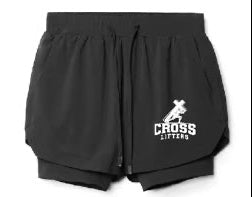
Session 1 and session 100. Same performance. 14-day returns.

Built to last the session and the year. 14-day returns.
FAQ
Why is the activewear market so large if most products are not built for serious training?
Because most buyers are not serious trainers. The market is built on casual athletic identity rather than performance function. Gear that photographs well and carries a compelling brand story sells to far more people than gear engineered for hard training use.
How do I know if activewear is actually functional or just marketed as functional?
Check spandex content for compression garments, look for flatlock seam construction, read the care instructions for specific cold wash and hang dry guidance. These tell you more than any marketing language.
Is expensive activewear necessarily better for training?
No. The market contains products that fail functional criteria at $80 and products that meet them at $20. Price reflects brand equity and marketing spend as much as technical construction.
What is the fatal flaw in the activewear market?
Most product is optimized for the purchase experience and the casual wear context rather than for serious training use. The gap between what the marketing implies and what the gear delivers under real training conditions is large and rarely discussed.
Who is the activewear market not built for?
Men who train four or more times per week at genuine intensity, who need gear that holds up through twelve months of regular washing, and who require functional performance in conditions harder than the market's average buyer ever reaches.
The market is large. Most of it is built for someone else. Know who it was built for before you spend in it.
Leave a comment
This site is protected by hCaptcha and the hCaptcha Privacy Policy and Terms of Service apply.