The activewear industry released a number this year that tells you almost everything you need to know about what most men are actually doing when they buy gym gear.
Over 68% of men prefer branded activewear for both gym and casual wear. Not just for training. For everything. The gym shirt is the everyday shirt. The training short is the errand short. The gear is not training equipment. It is identity apparel that happens to be worn in the gym.
That 68% is buying their gym clothes to be seen.
The other 32% are buying theirs to train in. Here is the difference, and why it matters more than the numbers suggest.
What buying gear to be seen actually costs you
It costs you in performance, through gear that compromises technical properties for aesthetic ones. It costs you in longevity, through gear designed for visual appeal rather than training durability. And it costs you something harder to quantify but more important than either: the clarity of knowing why you train.
The man who buys gear that serves as casual wear is building a training identity that depends on being visible. The logo, the colorway, the silhouette that reads as athletic outside the gym, these are not neutral choices. They are signals, and the act of sending them is part of why the training happens.
That is a fragile foundation. It depends on an audience. It depends on the gear remaining visually current. When any of those conditions change, the training is at risk.
What the 32% know that the 68% do not
The minority who buy gear purely for training have made a decision that most men never consciously make: the session does not need to serve any purpose beyond itself.
It does not need to build a visible identity. It does not need to produce content worth sharing. It does not need to signal to anyone outside the gym that training is happening. The session is the point. The gear is a tool. The tool goes in the bag when the session is over and comes out again when the next session begins.
This sounds simple. It is not common. The entire industry is structured to sell men on the idea that their training identity extends beyond the gym, and the gear is how that extension happens. The man who opts out of that system is making a countercultural choice about what the training is for.
What functional gear actually looks like
No logo large enough to perform for a room. No colorway engineered for social media. No silhouette designed to read as athletic to people who are not watching you train.
Technical moisture management that serves a sixty-minute session. Flatlock seam construction that eliminates friction during high-rep movement. Compression that supports muscle tissue under load. The gear that serves the session is not interesting to 68% of the market. It is essential to the 32% who train because the training itself is the reason.
Where Cross Lifters sits
Built for the 32%. Not the majority. Not the trend. Not the man who needs his training to extend into the rest of his day as a visible identity.
The man who trains because it means something, who shows up because of what the session produces rather than what it signals, who brings his faith into the gym as the foundation rather than the aesthetic, that is who this brand is for.

No logo. No lifestyle angle. Just the work. 14-day returns.
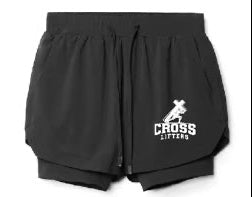
Gear for men who train because it means something. 14-day returns.
FAQ
Is there anything wrong with wearing gym clothes casually?
No. The issue is when the casual use becomes the primary reason for the purchase. Gear bought to be seen in produces a different training identity than gear bought to train in.
What is the difference between branded activewear and functional training gear?
Branded activewear serves dual purposes and optimizes for both. Functional training gear optimizes for the session only. The technical properties of purely functional gear are generally superior for training use.
Does it matter what brand of gym gear you buy?
The brand matters insofar as it reflects the decisions made in producing the gear. A brand building for function makes different decisions than a brand building for lifestyle visibility.
Why would a brand explicitly not try to capture the 68%?
Because the 68% and the 32% want fundamentally different things. Trying to serve both produces gear that fully serves neither.
What does functional training gear look like in practice?
Technical moisture management that handles a full session. Flatlock seam construction eliminating friction. Compression that supports muscle tissue under load. No design element present solely to serve an aesthetic outside the training context.
Train for the session. Not the signal. The 32% already know this.
Leave a comment
This site is protected by hCaptcha and the hCaptcha Privacy Policy and Terms of Service apply.